
-
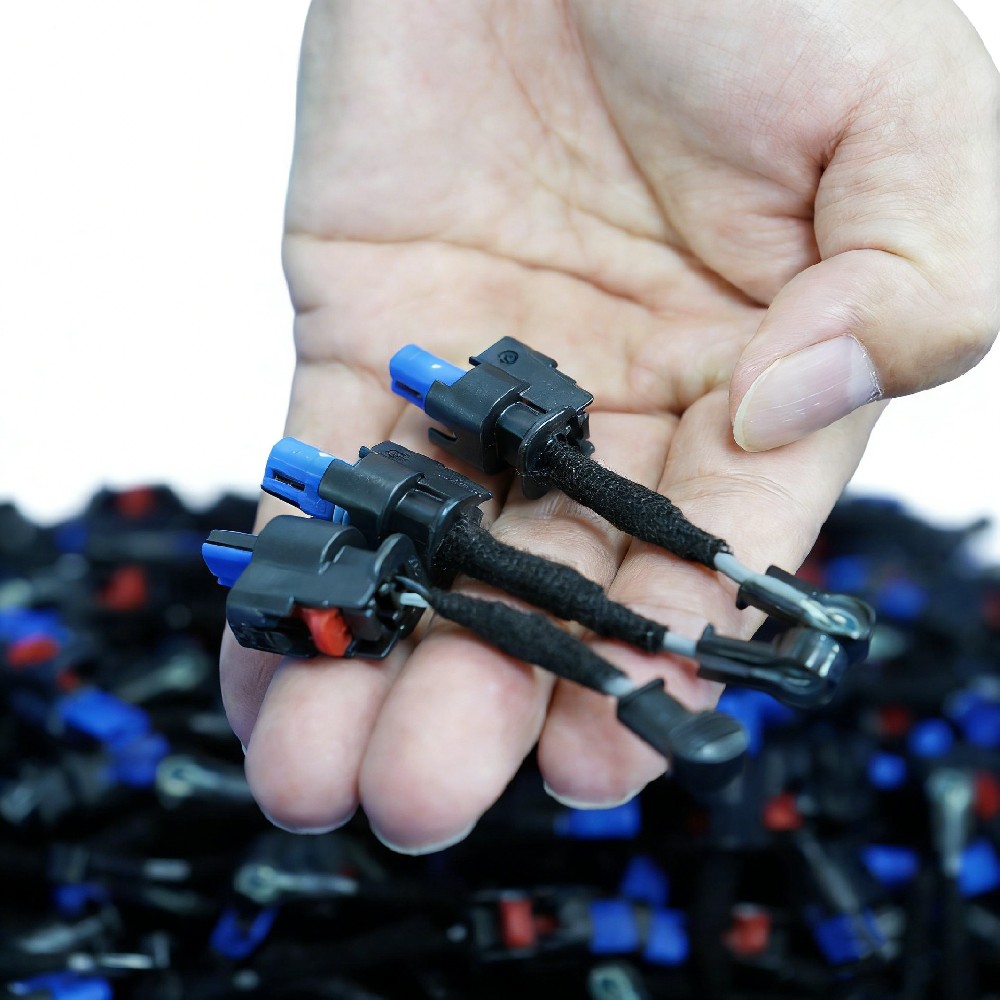
Car waterproof microphone wiring harness
The car microphone wiring harness is a crucial component of the in-car hands-free system, responsible for transmitting audio signals, power, and grounding connections, ensuring clear communication.
The physical connections of the wiring harness usually involve multi-pin interfaces. For example, in a 28-pin interface, specific pins correspond to the functions of the microphone. Pin 4 is connected to the red signal line (positive terminal of the microphone signal), pin 5 is connected to the white wire (possibly a backup or differential signal line), pin 6 is connected to the yellow wire (possibly used for power or ground), and pin 19 is connected to the black wire (usually ground). The actual definitions need to be confirmed through measurement with a multimeter, as there may be significant differences among different vehicle models. -
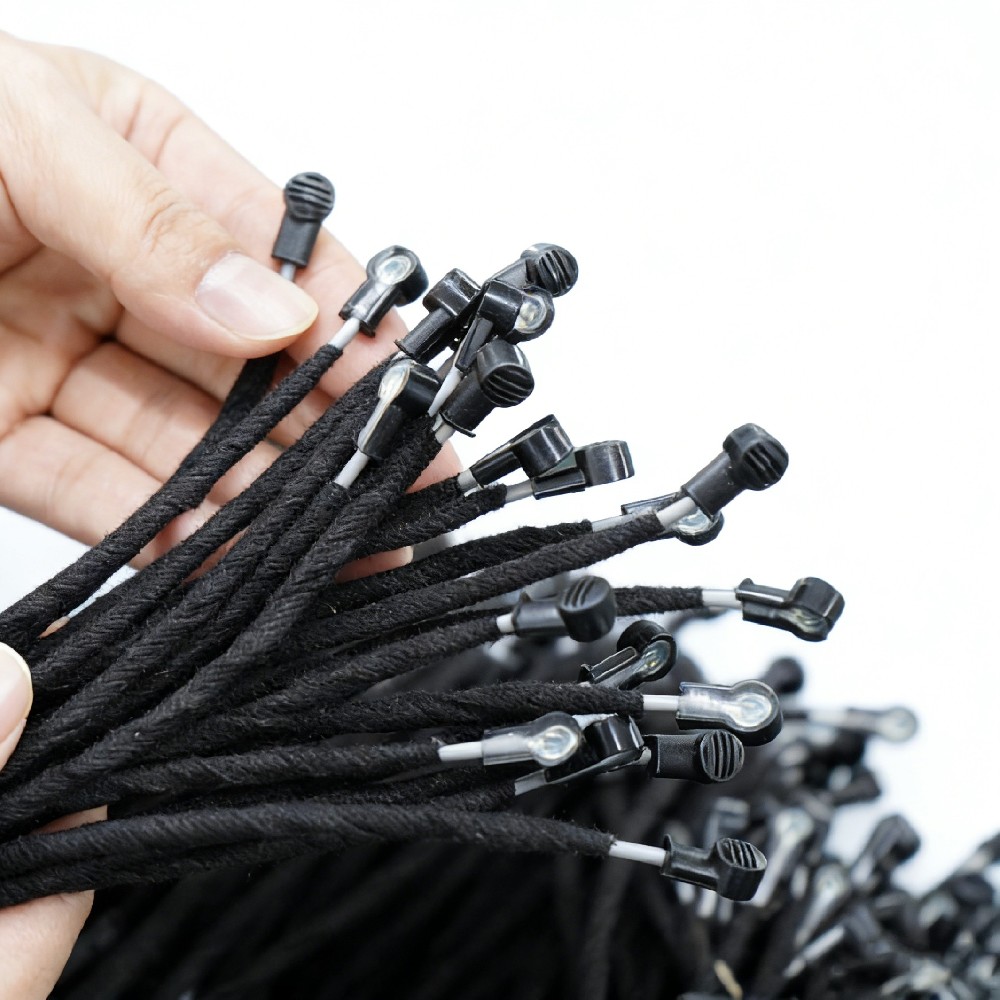
Microphone cable assembly
The microphone cable is a dedicated audio transmission cable that connects the microphone to the audio equipment. It is used to transmit weak audio signals, and its core design focuses on shielding performance to reduce external interference.
Basic Structure and Function: The microphone cable usually consists of a sheath, a shielding layer, an insulating layer, and a conductor. The sheath is the outermost layer and must have elasticity, softness, and dirt resistance; the shielding layer is made by methods such as copper wire weaving and aluminum foil isolation to prevent electromagnetic interference; the conductor is responsible for signal transmission and is typically made of tin-plated oxygen-free copper to reduce resistance and attenuation.
Shielding methods and selection: Common shielding methods include wrapping copper wire (suitable for short distances, but prone to poor shielding when bent), braided copper wire (good shielding effect, strong tensile strength, suitable for mobile devices), aluminum foil isolation (full coverage shielding, but the effect declines after repeated bending, mostly used for fixed installations), and composite isolation (such as aluminum foil + braiding, used in high interference environments). When choosing, it is necessary to balance the shielding effect, flexibility, and durability according to the usage scenario.


du@xllwire.com


✕